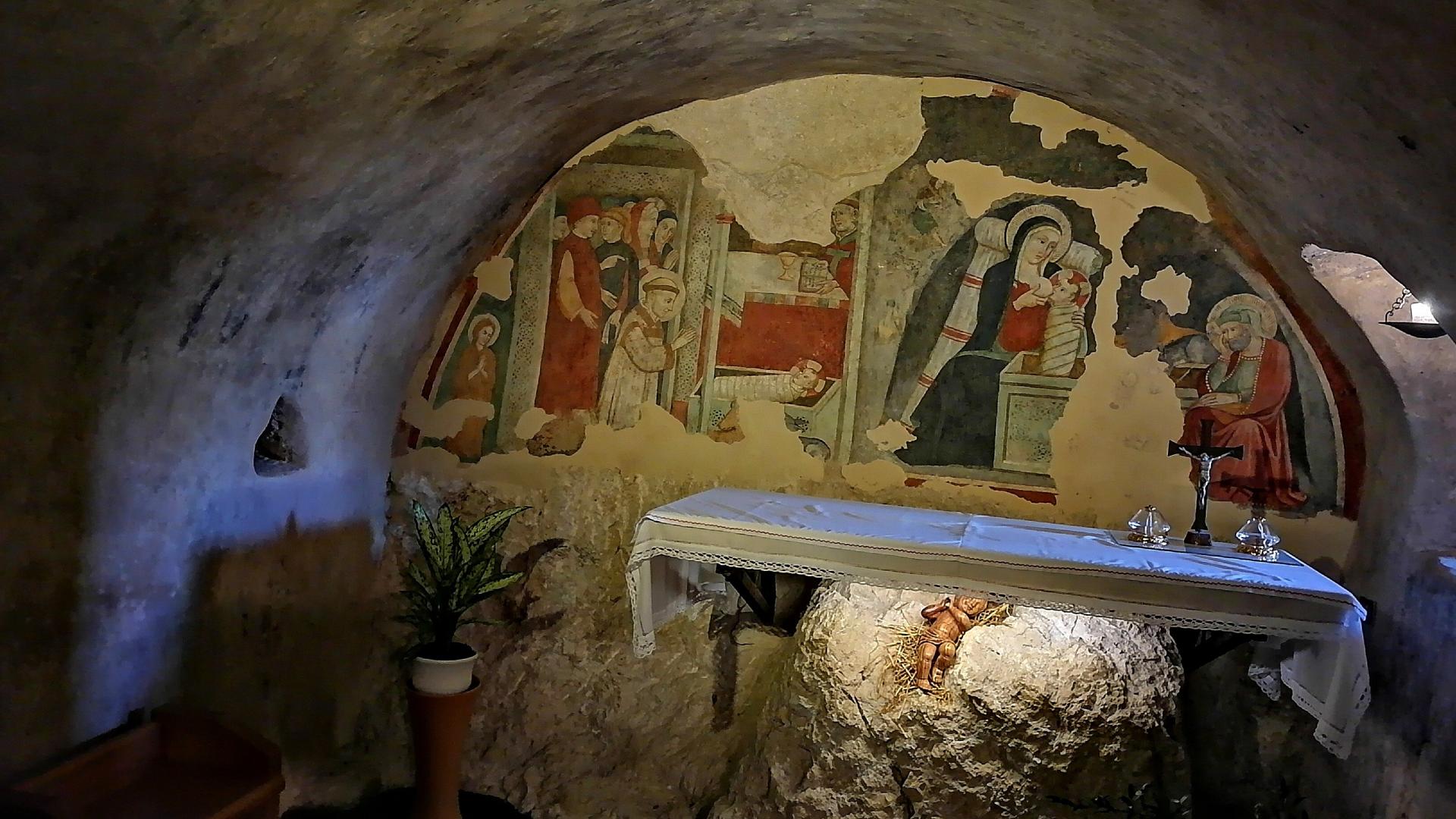
One of the first images depicting St. Francis is a painting that was kept in Greccio, but later it was destroyed in a fire. However, a copy of it remains, showing Francis lifting a handkerchief to his eye to wipe away his tears. This is a sign of how his contemporaries remembered him.
Francis's faith is “I want to see God” but also “I want to touch him and be nourished by him.” It seems that Francis connected the Incarnation with the reception of the Eucharist, which he expressed, and later his thoughts were recorded by his brothers in admonitions - “Behold, he humbles himself daily, as when he came from the royal throne to the womb of the Virgin, daily he comes to us in humble appearance; ‘daily he descends from the Father’s bosom onto the altar in the hands of the priest.’” (FP 144)
Francis viewed the mystery of the Incarnation in the light of Paul’s perspective, which is kenosis - the Son of God, his humiliation, his self-emptying (he emptied himself), his renunciation of all the advantages of divinity. Francis contemplates God becoming one of us. He even became a servant, humbled himself, although he was rich, he became poor. (Phil 2:5-8; 2 Cor 8:9) Francis follows the poor and humble Christ and therefore emphasizes poverty - minority in his life and the life of his brothers.
The humility of the Son of God, who became a child in a stable amid poverty and domestic animals, was for Francis a model of spiritual perfection. The one who died for sins on the cross chose to be born as a weak child subject to all. Francis wanted both animals and even inanimate creatures to participate in the joyful celebration of Christmas.
Therefore, he left the hermitage near Rieti, where he lived, and traveled to Greccio for Christmas. When this journey is described in a story about a fisherman who gifted him a water bird while rowing across a lake, Francis traveled by boat. Greccio became a witness to one of the most touching and significant events in Francis's life during the Christmas season. About two weeks before the feast, Francis called a certain Giovanni Velita and suggested to him: “If you want us to celebrate the upcoming Christmas festivals in Greccio, hurry up and carefully prepare what I tell you. I would like to celebrate the memory of that Child who was born in Bethlehem, and I would like, as much as possible, to see with my own eyes the bitter poverty that it had to endure as a child while lying in the manger, by which stood an ox and an ass, even when it lay on the hay.” (1Cel XXX,84)
Giovanni Velita was pleased and made sure to organize everything needed. We cannot say exactly what everything that meant. It was necessary to announce to the villagers from the surrounding area, craftsmen from Greccio, and people in nearby settlements. Thus, on Christmas night, the people from Greccio left their parish and village churches and went to celebrate Christmas at the place chosen by Francis.
Finally, with a bit of imagination, he could realize his dream of seeing, feeling, and touching the reality of the birth of the Lord Jesus Christ. During the celebration of the Eucharist, he served as deacon, thus singing the text of the Gospel about the birth of Jesus Christ. And then he preached. Thomas of Celano writes about this: “...he preaches to the gathered people about the birth of the poor King and blesses the town of Bethlehem. Often, when he wants to say the name Jesus, he lovingly says ‘the Bethlehem child.’ And when he utters the word Bethlehem, it sounds like the bleating of a lamb. More than words, his mouth flows with love. When he pronounced the name ‘the Bethlehem child’ or ‘Jesus,’ he licked his lips with his tongue, as if to illustrate even more vividly the sweetness of this name.” (1Cel XXX, 86)
Francis then took the figure of the Child, held it in his arms, and presented it to those present for veneration. Giovanni Velita thought he saw the previously lifeless image come to life and transformed into the living Child, Christ.
At the end of the service, those present entered the sanctuary and took pieces of straw to keep as relics. Reports circulated that sick domestic animals that ate the straw were healed, and pregnant women who touched it gave birth easily.
That Christmas in Greccio in the year 1223 became significant and marks the beginning of our nativity scenes with flickering lights in cardboard and plaster figures that bring gifts along the path to the Holy Cave.
For us, this may be folklore after more than 800 years, but for Francis, it was prayer and contemplation. He immersed himself in prayer and created situations that transformed life into prayer and prayer into life.
This little poor man from Assisi was already on the road to becoming a saint of miracles two years before his death. After his canonization, an altar was to be built in his honor at the place where the nativity scene was in Greccio. The humility of the Son of God, who became a child in a stable amidst poverty and domestic animals, was for Francis a model of spiritual perfection. The one who died for sins on the cross chose to be born as a weak child subject to all. Therefore, Francis cried out with God’s heart his entire life, (he had the same heart) and was a visible sign of God’s ‘weeping’ in the world. Francis entered into God’s heart, espoused to God’s suffering, thus he could do nothing else but weep all his life. “Love is not loved,” according to some texts, this was the reality that troubled St. Francis of Assisi. He, out of love for the suffering Lord, was not ashamed to cry and complain aloud. The Lord thirsts for our love in the opening of the whole heart only to Him. Therefore, we can cry out with St. Francis - we desire nothing, we want nothing else, we take pleasure in nothing else but in our Creator, Redeemer and Savior, the one true God, who is complete goodness, all goodness, whole goodness, true and supreme goodness.
Brother Priest Karol Baran OFMCap
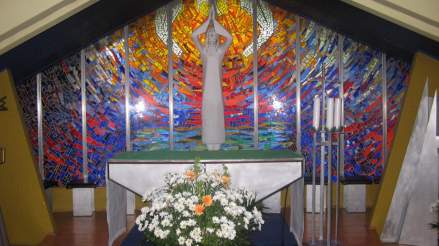
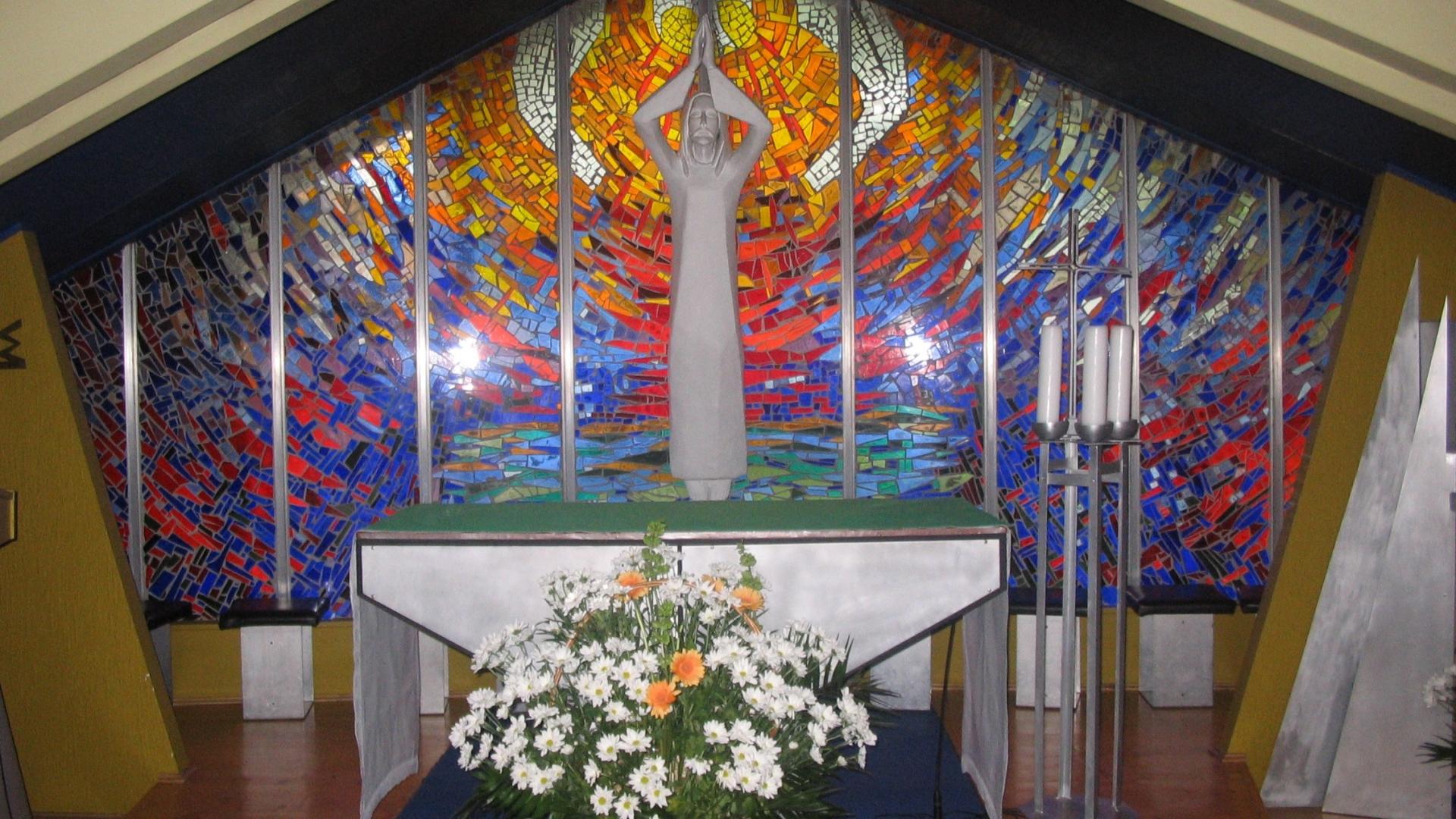
(The introductory photograph is from the place where St. Francis of Assisi served in 1223 in Greccio as a deacon during Mass and realized the first nativity scene for the feast of the Nativity of the Lord.)
_____________________________________
References:
Texts from Franciscan spirituality 1992/March No. 5; p. 19Texts from Franciscan spirituality 2007/February No.154 p. 19
https://www.frantiskanstvi.cz/luc/luc-vyb-tem-I-09.pdf; pp. 28-29
GianMaria Polidoro: Francis of Assisi; Seraphim; 2008; pp. 252-254
Thompson: Francis of Assisi; Minor, Capuchins in Slovakia; 2022; pp. 125-126
http://www.archivioradiovaticana.va/storico/2016/09/20/meditácia_pápeža_františka_v_assisi_počas_modlitby_za_pokoj/sk-1259505;(cf. Franciscan sources, No. 1413).
The writings of St. Francis Unconfirmed rule 70; p. 85